

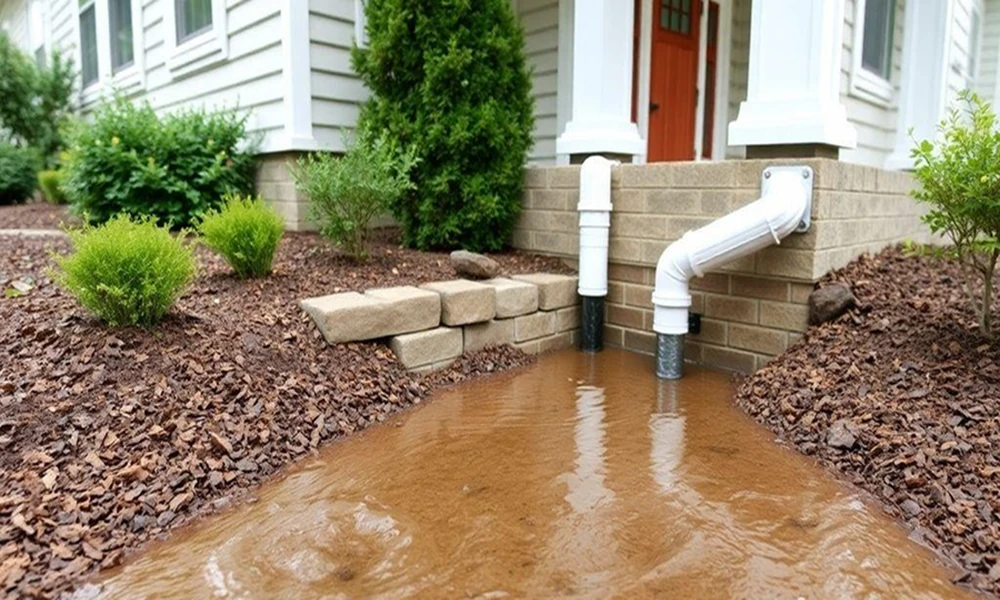
Water damage doesn’t always begin with a dramatic roof leak or a flooded basement. Sometimes, the earliest warning signs are much easier to overlook: a damp patch beside the foundation, an unusual stain on an exterior wall, or soil washing away after a storm.
Your home’s drainage system directs rainwater away from areas where excess moisture can cause problems. Gutters, downspouts, landscaping, and ground grading all contribute to that process.
When one component stops working properly, water may accumulate where it shouldn’t. Recognizing the warning signs early can help homeowners address small drainage issues before they develop into more complicated repairs.
Here are seven commonly overlooked signs worth investigating.
1. Water Pools Around Your Foundation
Small puddles after rainfall may seem harmless, especially when they disappear within a few hours. However, water repeatedly collecting near the foundation deserves attention.
Pooling water can indicate several drainage problems, including poorly positioned downspouts, clogged gutters, compacted soil, or ground that slopes toward the house.
Start by observing where the water gathers and how long it remains after the rain stops.
Check whether downspouts discharge water directly beside the foundation. If they do, an appropriate extension or drainage solution may help move that water farther away.
Also inspect the surrounding landscape. Ideally, the ground should encourage surface water to flow away from the structure rather than collect against it.
2. Soil Erosion Appears Beneath the Roofline
Have you noticed narrow trenches in your flower beds or patches where mulch repeatedly washes away?
These changes may indicate that rainwater is falling from the roof in concentrated areas instead of moving through the gutter system.
When gutters overflow, water can strike the same section of soil repeatedly. Over time, this may displace mulch, expose plant roots, and create uneven landscaping.
Look for erosion directly beneath gutter corners, joints, and downspout connections.
If the damage becomes more noticeable after heavy rainfall, observe the gutters from a safe position at ground level during the next storm.
The pattern of water movement can help identify whether the issue involves a blockage, improper gutter slope, or another drainage concern.
3. Gutters Overflow Even During Moderate Rain
Gutters should collect roof runoff and direct it toward downspouts. When water consistently spills over the front edge, something may be interfering with that process.
Leaves, twigs, roofing granules, and other debris can accumulate inside gutter channels. These materials may eventually form blockages that prevent water from reaching the downspouts.
However, overflowing gutters aren’t always caused by debris. Incorrect gutter pitch, damaged sections, undersized components, or blocked underground drainage connections can produce similar symptoms.
For homeowners in Fishers, Indiana, evaluating local options using the search phrase gutter cleaning service fishers can be a practical starting point when accumulated debris or obstructed downspouts appear to be contributing to overflow.
A thorough inspection should identify whether cleaning alone will restore proper drainage or whether repairs are also necessary.
Because gutter work frequently involves ladders and elevated roof edges, homeowners should avoid climbing onto roofs or attempting unsafe access.
4. Exterior Walls Develop Unexplained Water Stains
Dark streaks or discoloration beneath the roofline may indicate that rainwater isn’t flowing through the drainage system as intended.
When gutters leak, overflow, or pull away from their mounting points, water may repeatedly run down siding, trim, and exterior walls.
These conditions can leave visible staining and, depending on the materials involved, contribute to deterioration.
Pay particular attention to areas around gutter seams, roof valleys, and corners where large amounts of runoff converge.
If stains return after cleaning, the problem may involve a leaking joint, damaged flashing, or another building-envelope issue.
Identifying the source matters because simply washing away the stain won’t prevent it from returning.
5. Your Basement Smells Damp After Rain
A persistent musty odor in a basement or crawl space can have several causes, including inadequate ventilation, condensation, plumbing leaks, or moisture entering from outside.
Poor exterior drainage is one possibility worth investigating.
When rainwater accumulates near foundation walls, moisture may enter through vulnerable joints, cracks, or other openings.
Homeowners should look for damp wall surfaces, water stains, peeling paint, or visible moisture near basement windows.
Examine the outdoor drainage conditions at the same time. Check whether gutters discharge properly and whether water collects along the foundation.
If basement moisture continues despite correcting obvious exterior drainage problems, a qualified professional may need to investigate waterproofing, plumbing, or structural concerns.
6. Your Gutters Sag or Pull Away From the House
A sagging gutter isn’t merely a cosmetic issue.
Gutter sections can become overloaded by accumulated debris, trapped water, or ice. Loose fasteners and deteriorated fascia boards can also affect how securely the system remains attached.
When a section begins to sag, its slope may change, preventing rainwater from traveling efficiently toward the downspout.
The resulting standing water can make the problem worse.
Inspect your gutters visually from the ground. Look for uneven sections, gaps between the gutter and fascia, or water spilling from unusual locations.
A professional inspection can determine whether the problem requires cleaning, new fasteners, fascia repair, or replacement of damaged gutter sections.
Ignoring visible movement may allow the underlying issue to progress.
7. Downspouts Release Very Little Water During Rain
A downspout that produces little or no discharge during steady rainfall may indicate an obstruction.
Leaves, small branches, and compacted debris can collect around gutter outlets or inside downspout bends.
When water cannot pass through, it may back up into the gutter channel and eventually overflow.
However, low discharge alone doesn’t confirm a blockage. Rainfall intensity, roof configuration, and the location of the downspout also affect water flow.
During rainfall, safely observe whether water exits the downspout and where it travels afterward.
If the downspout connects to an underground drainage pipe, a blockage farther along that connection may also affect performance.
Avoid forcing objects into concealed drainage lines without understanding their layout, as doing so may damage the system.
Conclusion
Effective rainwater management depends on more than having gutters installed. The entire drainage system must work together to carry water away from vulnerable areas of the home.
Pooling water, soil erosion, overflowing gutters, exterior stains, basement moisture, sagging gutters, and restricted downspout flow can all provide useful clues about potential problems.
A practical maintenance routine includes checking visible drainage conditions after major storms, removing accumulated debris when necessary, and addressing damaged components promptly.
By paying attention to these early warning signs, homeowners can make better maintenance decisions and reduce the likelihood of avoidable moisture-related damage.
