

When we look at a wooden floor, staircase, door, or piece of furniture, we usually pay attention to its colour, texture and overall appearance. But have you ever wondered how a tree becomes the smooth and usable wood that eventually reaches our homes? Wood does not simply travel from a forest to a finished interior. There are several stages involved in between.
This is where processed wood / sawn timber (ไม้แปรรูป, term in Thai) comes into the picture. Timber needs to be cut, dried, graded and prepared according to its intended application. Hence, understanding this journey can also help you understand why the quality of wood matters when selecting materials for a project.
What Is Sawn Timber?
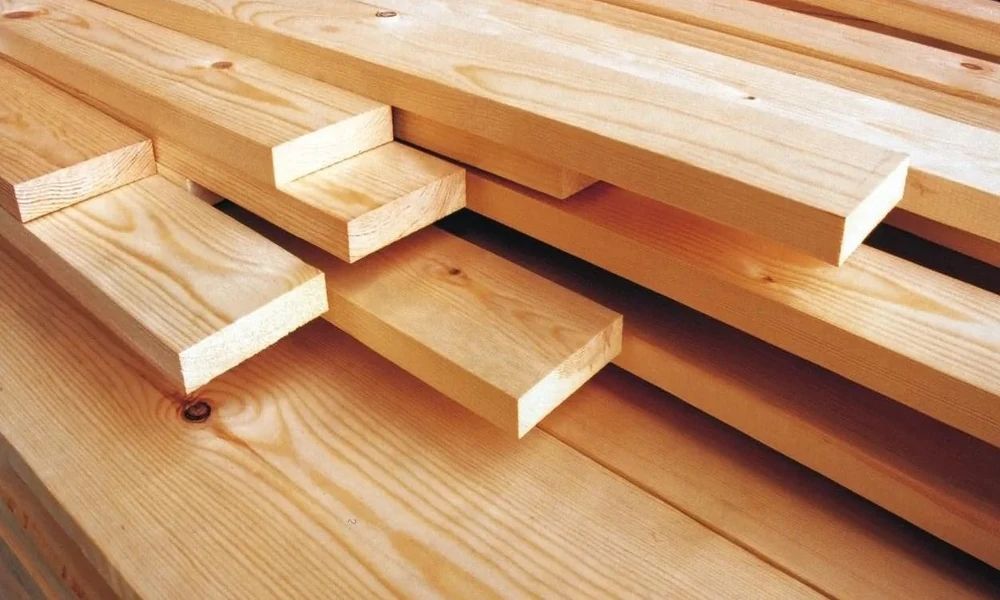
Sawn timber is basically timber that has been cut from logs into usable dimensions. Once trees are harvested, the logs are taken to a sawmill where they are cut into boards, planks or other required sections.
However, freshly cut timber still contains moisture. It may also have natural variations and imperfections. Therefore, sawing is generally only one of the first stages in turning raw timber into a material suitable for construction, furniture or interiors.
How Does Raw Timber Become Usable Wood?
After sawing, timber usually needs further preparation. Drying is particularly important because excessive moisture can cause wood to shrink, swell or change shape as environmental conditions change.
The timber can then be processed according to the desired product as follows:
- Drying to reduce moisture content.
- Grading according to quality and characteristics
- Sawing into necessary sizes.
- Breaking the surface to achieve a smoother surface.
- Treatment based on the desired use.
- Finishing to attain the desired look.
Therefore, Processed wood / Sawn timber may go through various processes before it is fit for a specific project.
Why is Proper Processing Important?
Consider the installation of timber flooring with timber that has not been dried. As the moisture level changes, the boards may move, resulting in gaps or other dimensional changes. That is why the correct preparation is a significant aspect of working with natural wood.
Timber is also processed to facilitate its use in certain applications. A floorboard, say, will need other dimensions and finish than timber to be used in a staircase or ornamental wall.
Therefore, you must not judge wood based on its beauty. It is also important in its preparation and its appropriateness to the environment it is supposed to be used in.
Where Is Processed Timber Used?
Wood is likely to be used in both traditional and modern spaces due to its versatility. Sawn timber / processed wood may ultimately be used as flooring, stair parts, doors, wall features, ceilings, decking and furniture.
The precise preparation will, of course, depend on the location of the wood use. Timber that is to be used as an interior decorative element will not be subjected to the same conditions as wood that is used outdoors.
Wood in Your Project
The first thing to consider before selecting timber is where you are going to use it. Is it for flooring? Will it be subjected to the outside environment? Would you like the natural properties of solid wood, or is the project in need of a more engineered construction?
When you are familiar with the application, then you can think about the wood species, dimensions, moisture level, finish, and construction.
From Tree to Finished Space
The wooden surface that you see in a finished home is actually the result of several carefully managed stages. From selecting and sawing logs to drying, sizing and finishing them, every step prepares timber for its eventual purpose.
Therefore, understanding Processed wood / Sawn timber gives you a better idea of what goes into the wood products around you. The next time you admire a wooden floor or beautifully finished door, you will know that its journey began long before it became part of the space.
