

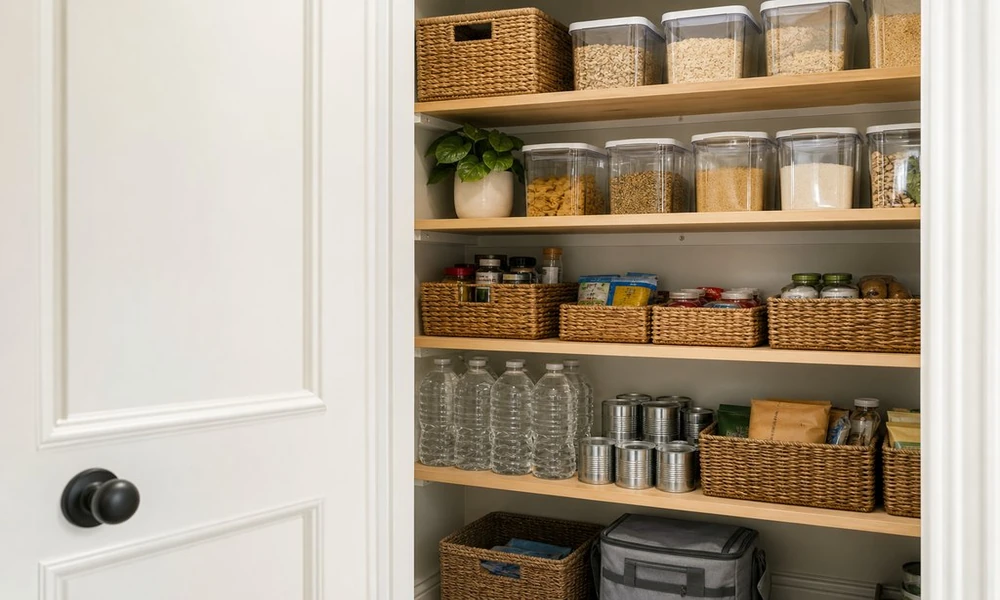
Small kitchen pantry storage
A small kitchen pantry needs to serve two purposes at the same time. On a normal Tuesday, it has to accommodate breakfast cereal, coffee, lunchbox snacks, pasta, and dinner fixings without needing a treasure hunt. Come hurricane season, that same space might also have to accommodate bottled water, canned food, batteries, shelf-stable milk, pet food, and emergency provisions for a few days.
That’s the two-pantries-in-one dilemma. Smart pantry cabinetry in Davie can allow for both types of products, while keeping everyday items accessible. No more playing Tetris with water bottles.
First things first: Where are the daily essentials?
Think of your pantry like a two-pantry system. Where are you most likely to find the items you use daily? It’s more efficient if the most-used items are placed on the middle shelves.
Adjustable shelving helps here, because your household’s grocery shopping might dictate different shelf heights every month. Maybe you had to buy some really tall cereal boxes last week, but this week you only have some small snack bins, some jars, and baking supplies to store. With adjustable shelving, there’s no wasted space above shorter items. For local context, the team at Kitchen Remodeler Davie, a kitchen remodeling company based in Davie, Florida, covers pantry cabinets Davie in more detail.
In a busy household, the middle shelves might house:
- Breakfast foods and coffee stuff
- Pasta, rice, condiments, cooking oils
- Snack stuff for lunches and the kids’ backpacks
- Spices and baking items
A Davie household with school-age kids might prefer their snacks within arm’s reach, while keeping delicate or heavy items out of their hands. Separating the daily pantry items from the occasional ones means less mess around the countertops and a quicker clean-up after shopping trips.
Next, store those heavy backup items lower
Where are you storing those heavy items? Water bottles and canned goods take up a lot of space and tend to get lost in the back of a deep pantry shelf.
Deep lower pull-outs come in handy here. Pull-outs bring everything to the front of the shelf instead of you having to kneel down and reach over several rows of cans to find what you’re looking for. Lower pull-outs can store bottled water (look at https://cdc.gov/water-emergency if you want numbers), canned vegetables, soups, beans, crackers, and all manner of dry goods that go into a hurricane kit.
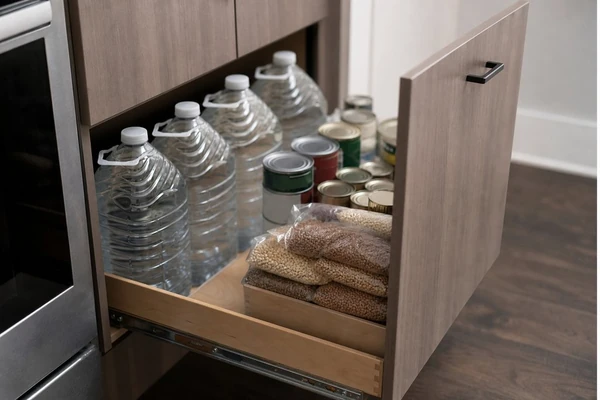
Pantry cabinets with storage shelves
Obviously, a deep lower pull-out is excessive if you already have a big pantry elsewhere and only use the cabinet for a handful of dry goods. But in a tight kitchen, pull-outs keep the bottom half of the cabinet from being a dark hole filled with heavy stuff.
Store the heaviest items low, for safety’s sake. And keep light items up high so you don’t crowd out everything else.
Don’t forget the door
A small kitchen pantry often has a door. It’s common to ignore the door entirely, but there are a few things you can store on a door.
Narrow racks on the inside of the door can house small bottles, seasoning packets, foil, plastic wrap, granola bars, and anything that tends to get lost behind larger items. When the hurricane season rolls around, the door might also be the perfect place to stash your flashlights, spare batteries, plastic cutlery, matches, and a manual can opener. Just keep your disaster-related stuff on the door so it doesn’t get covered with canned food.
Keep in mind that door storage is limited by the depth of the door. You can’t put a big jar on a thin door rack if it blocks the door from closing. Consider how much space you’ll have between the door and the shelves when you choose racks.
What belongs in a third space?
Some things shouldn’t take up prime real estate in your small kitchen pantry. For example, paper towels, extra dog food, giant bags of rice, and huge boxes of snacks are fine for a third shelf or a tall cabinet elsewhere in the pantry. You might also keep appliances in this section. Slow cookers, blenders, and other small appliances can sit on the counter, but aren’t worth it if they’re only used every now and then.
The right size is dependent on what you actually buy. Do you stock up on individual water bottles, gallon jugs, or something you can refill?
Keep emergency food in sight
Don’t let your disaster food become disaster forgotten food. Put it somewhere that you’ll notice it when you’re stocking the pantry, and try using it before it goes bad. Clear bins or labels can be used to distinguish between the emergency stash and the regular pantry items.
A well-organized kitchen pantry doesn’t need to keep things forever. It just needs to make the most important household supplies easy to find when the storm clouds gather.
Don’t forget to measure the cabinet opening itself, as the inside of the shelf isn’t always the full story. A pull-out requires space for its glides, and a door rack needs room for the door to shut.
Pantry cabinets should be designed around how you live and shop.
Pantry storage should have some space in South Florida’s humid climate as well. Don’t push the shelves to the back of the cabinet, and use airtight bins for dry goods like flour, cereal, and even pet food. That will help to reduce excess moisture, spills, and bugs between shopping trips.
Before the next shopping trip
Take a quick inventory of your current pantry. What items are hard to reach? What’s too heavy to be up top? What do you always end up buying in bulk? Then take some measurements of the tallest items, largest bottles of water, and any appliances you’d like to keep in the pantry.
