
DIY home projects can be fun and rewarding. There is something satisfying about fixing a problem on your own or making part of your home look better. Maybe you are painting a room, building shelves, repairing a fence, or using power tools for the first time. Still, before you begin, it is important to think about safety first.
A lot of people get excited about the tools and materials, but forget that even small home projects can lead to injuries. Dust can get into your eyes. Loud tools can affect your hearing. Sharp materials can cut your hands. Even a simple slip can turn into a painful accident. That is why using the right safety gear matters.
Safety Glasses or Goggles
Eye protection is one of the most important things to wear during DIY work. Many projects create flying dust, wood chips, metal bits, or paint splashes. Drilling, sanding, sawing, and even hammering can send tiny particles into the air.
Safety glasses are a good choice for many general home tasks. Goggles are even better when you need more coverage, especially if you are working with chemicals, heavy dust, or anything that may splash. Regular eyeglasses do not give the same protection, so it is better not to rely on them.
Work Gloves
Your hands do most of the work during home projects, so protecting them should be a priority. Work gloves help prevent cuts, scrapes, splinters, and blisters. They are useful when carrying wood, lifting rough materials, pulling weeds, or handling hand tools.
Different projects may need different gloves. Thick gloves are great for heavy lifting and rough work. Lightweight gloves may work better for jobs that need more finger movement. If you are painting or using cleaners, disposable gloves can help keep chemicals off your skin.
Still, one thing to remember is that gloves should fit properly. Gloves that are too loose can make it harder to grip tools safely.
Dust Mask or Respirator
Many DIY projects create dust or fumes that are not good to breathe in. Sanding drywall, cutting wood, scraping old paint, or using strong adhesives can all affect the air around you.
A dust mask can help with lighter tasks, especially when there is sawdust or fine particles in the air. For stronger fumes or heavier dust, a respirator offers better protection. This can be especially important in closed spaces or older homes where harmful materials may be present.
Even if a project seems quick, it is still smart to protect your lungs. Sometimes the danger is not obvious right away.
Hearing Protection
Hearing protection is often ignored, but it should not be. Power tools like saws, drills, nail guns, and sanders can be very loud. You may think the noise is only for a short time, but repeated exposure can still affect your hearing over time.
Earplugs are a simple and affordable option. Earmuffs are also useful and may feel more comfortable during longer projects. If a tool seems very noisy, it is probably a sign that hearing protection is a good idea.
Sturdy Footwear
It may sound basic, but wearing the right shoes can make a big difference. DIY work often involves heavy tools, nails, sharp objects, slippery surfaces, or uneven ground. Open-toe sandals and thin slippers do not protect your feet well.
Closed-toe shoes or work boots are usually the better choice. They help protect against dropped tools and improve grip while walking or climbing. Good footwear also helps you feel more stable, especially if you are carrying materials or working outdoors.
Extra Gear for Specific Jobs
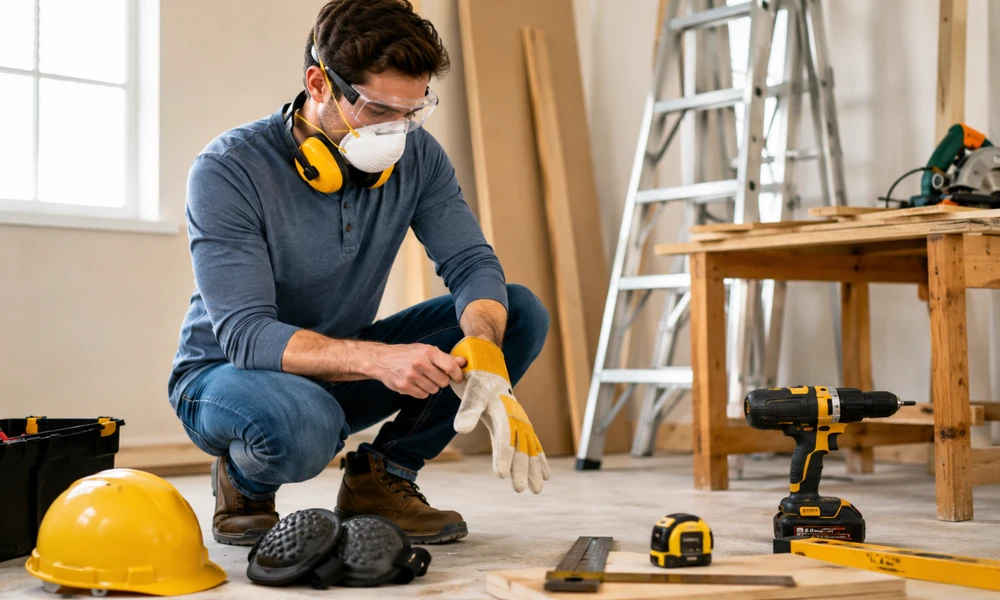
Some projects may call for additional protection. A hard hat can be useful if you are working in an attic, near overhead structures, or in places where something might fall. Knee pads are helpful for flooring work, tiling, or any task that keeps you kneeling for a long time. Long sleeves and durable clothing can also protect your skin from scrapes and minor cuts.
Final Thoughts
The right safety gear depends on the project, but some items are almost always worth having nearby. Safety glasses, gloves, a dust mask or respirator, hearing protection, and sturdy footwear can go a long way in helping you stay safe.
Before starting any DIY home project, take a moment to think about the risks. That small step can help you choose the proper gear and avoid injuries that could slow you down. DIY work feels a lot better when you finish the job safely.
This post was written by a professional at Anawalt Lumber. Anawalt Lumber is a family-owned lumber yard and hardware store serving Los Angeles for over a century. Known for quality lumber, contractor supplies, Hollywood hardware store, and a full-service nursery, Anawalt provides personalized service for homeowners and licensed contractors. From job pricing and bulk discounts to special-order materials with fast delivery, Anawalt is your trusted local building supply partner in Malibu, West LA, and Hollywood.
