

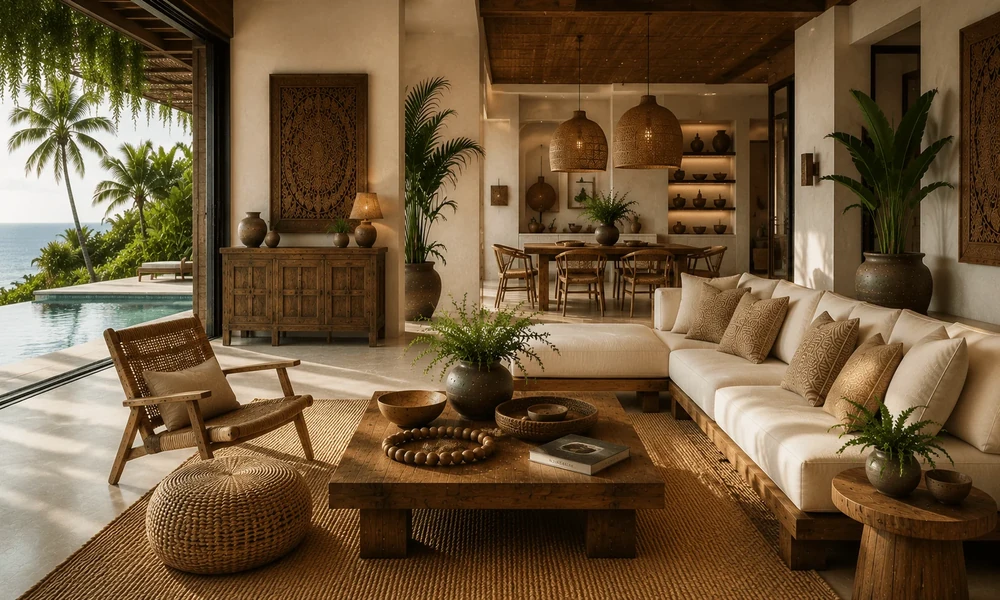
Heat and humidity quietly dictate every good tropical room. Designers who ignore the climate end up fighting it daily. Teak, rattan and limestone earn places through performance, not trend. Smart villa interior design treats breeze and shade as materials. Open courtyards pull greenery into living spaces without sacrificing privacy. Finishes must handle damp seasons yet still feel refined underfoot. After sunset, lighting takes over the job of setting mood. Together, these choices let comfort and elegance share one roof.
Natural Materials Shape the Tropical Mood
Wood with low thermal mass releases heat fast after dusk. Teak resists rot, so it suits floors and doors. Rattan chairs breathe, letting air pass beneath seated guests. Bamboo screens filter glare without blocking the view. Stone, by contrast, stays cool and grounds lighter textures. Hand-carved details from local craftsmen add irreplaceable character.
Why Does Cross-Ventilation Matter Indoors?
Still rooms trap moisture, and moisture breeds mildew. Openings on opposite walls push breezes straight through rooms. High ceilings let warm air rise away from occupants. Ceiling fans then stir that upper layer gently. Louvered shutters keep rain out while airflow continues. Air conditioning becomes a backup, not a constant drain.
Courtyards Blur the Line Between Rooms
A central courtyard turns the whole floor plan outward. Each room borrows its daylight and greenery.
- Sliding timber panels open lounges onto planted terraces.
- Shallow reflecting pools cool passing breezes before entry.
- Frangipani and palms soften the hard stone edges.
- Covered walkways keep guests dry during monsoon downpours.
Which Finishes Survive Heat and Humidity?
Surfaces fail first when planning ignores damp seasons. Glossy marble, for instance, turns slick after a rain shower. Durable villa interior design pairs beauty with grip and resilience.
- Textured porcelain prevents wet slips.
- Granite counters resist sun damage.
- Lime plaster lets walls breathe.
- Linen upholstery dries out fast.
- Sealed terrazzo shrugs off spills.
Can Lighting Change a Villa’s Character?
Absolutely, and the change unfolds twice each day. Deep eaves soften midday glare into an even glow. At night, woven pendant shades cast patterned shadows across walls. Warm bulbs near amber tones flatter wood grain. Cool white light flattens texture and feels clinical. Dimmers let one dining room host breakfast and late dinners.
Patina Turns Teak Into Lived History
Polished showrooms impress on day one, then fade quickly. Teak floors move the other way. Each monsoon deepens its grain; bare feet burnish the boards. Rattan softens, and lime plaster gathers gentle mottling. Refinement here is not a fixed finish. It grows from material, climate and daily use together.
FAQs
What woods suit tropical villa interiors best?
Teak, merbau and ulin handle humidity well and resist insect damage. Each benefits from oiling once or twice a year to hold its colour.
Can air conditioning replace good ventilation?
Cooling units lower temperature but rarely clear stale, damp air from rooms. Cross-breezes and fans manage moisture at far lower running effort over time.
Which fabrics work well in humid rooms?
Linen, cotton and outdoor-grade acrylics dry quickly and resist mould growth. Velvet and heavy wool trap dampness, so designers keep them to small accents.
Do courtyards compromise privacy?
Not when screens, planting and angled walls are layered with care. A courtyard can feel open to the sky yet remain hidden from neighbors.
